Cutting the grocery bill without making dinner worse
A smaller grocery bill does not have to mean smaller meals or food nobody wants. Start with waste, expensive habits and the nights that turn into takeaway.
The quickest way to make a grocery budget miserable is to begin with the food everyone likes. The good cheese disappears. The fruit bowl gets meaner. Dinner becomes a worthy combination of whatever was cheapest, and by Friday somebody orders takeaway because nobody can face it.
That approach can lower the supermarket total for a week. It rarely lowers what the household spends on food for long.
A better grocery cut starts with the money that is buying nothing useful: food that gets binned, specials that were never needed, ingredients for abandoned plans and expensive rescue dinners on nights when cooking was never realistic. Remove those first and you can often leave the meals themselves largely alone.
Work out which problem you actually have
Before changing the menu, keep two weeks of grocery receipts and note the extra food spending that does not appear on them. That includes the Thursday takeaway, the bakery stop after sport and the mid-week trip for milk that somehow became six other things.
You do not need a complicated spreadsheet. Sort what you find into four rough buckets:
- food eaten at home
- food bought but thrown out
- unplanned top-up shops
- takeaway or convenience food that replaced a planned meal
The distinction matters. A household throwing out $25 of vegetables has a different problem from one that eats everything it buys but abandons two planned dinners every week. The first needs a more realistic shopping list. The second needs easier dinners.
Do not try to calculate the perfect number. You are looking for the biggest leak, not preparing an audit.
Cut waste before cutting food
Food waste is the least painful place to start because nobody enjoyed the slimy spinach at the bottom of the crisper anyway.
Look at what was thrown out, then change the plan that put it there. A full bunch of coriander for one recipe is not one ingredient. It is one ingredient plus a second meal that uses the rest. The same goes for half a cabbage, an open tub of yoghurt and the remaining bread rolls.
This does not mean forcing every leftover into a strange end-of-week stew. It means planning in pairs:
- tacos one night, then coriander and cabbage in rice bowls
- roast chicken, then chicken sandwiches or a simple pasta
- yoghurt with a curry, then yoghurt with breakfast
- half a bag of spinach in a frittata, then the rest through pasta
Freezing also counts, but only if the frozen food has a future job. A labelled container that says “two portions of curry” can replace lunch next Tuesday. An unlabelled tub pushed behind the peas is just delayed waste.
Save money at the meal level
Shaving fifty cents from ten ingredients takes attention and often makes a recipe worse. Replacing one expensive dinner can save more while leaving the other six untouched.
Think in whole meals. Which dinners in your usual rotation are naturally inexpensive, filling and liked? Eggs on toast, fried rice, pasta with tomato sauce, baked potatoes, dhal, soup and toasted sandwiches all qualify in the right household. Pick the ones your family already considers dinner. There is no saving in a cheap meal that comes back uneaten.
Put one of those meals into the week on purpose. It becomes a budget anchor, which gives the roast, steak or favourite fish dinner room to stay. If the week still needs to come down, change a second meal. This is much easier to judge than making every plate slightly cheaper and slightly less appealing.
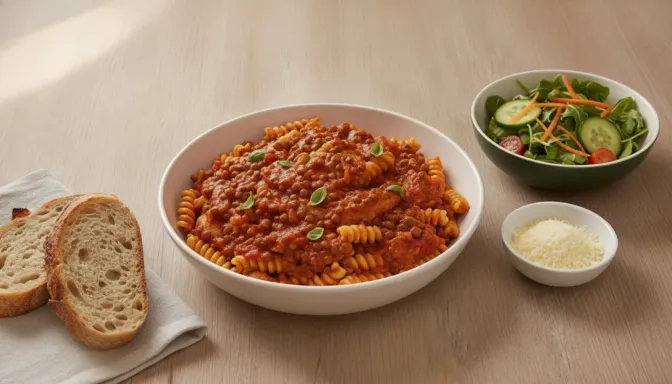
You can use the same idea inside a meal. A bolognese does not have to become meat-free to cost less. It can use a little less mince and gain lentils, mushrooms or grated vegetables. A curry can keep the chicken and include chickpeas. The aim is not to disguise food or pretend the result is identical. It is to preserve the meal people wanted while changing the part that drives its cost.
Plan a rescue dinner
Most weekly meal plans are written for a household with plenty of time and energy. The real household arrives home late on Wednesday, discovers the chicken is still frozen and spends $65 on takeaway.
A rescue dinner is the meal for that night. It should take less time than ordering food, use things that keep, and require almost no judgement. Frozen dumplings and vegetables, pesto pasta, beans on toast, eggs, or a portion of something already cooked can all do the job.
This is not an emergency meal you hope never to use. Put it in the plan on the busiest night. If the night turns out to be easy, cook something else and keep the rescue meal for next week.
Convenience has a price, but it is worth comparing it with the alternative you will actually choose. A bag of frozen dumplings costs more than making them from scratch and less than takeaway. The honest comparison is the second one.
Be suspicious of savings that create more spending
Supermarket specials are useful when they reduce the price of something already on your list. They are not useful merely because the discount is large.
Three questions catch most false savings:
- Were you going to buy it anyway? If not, the special added spending.
- Will you use all of it? The large pack is not cheaper if a third goes in the bin.
- Is the unit price actually lower? Bright shelf labels draw attention to the saving, not to what you pay per 100 grams or per item.
There is one more comparison the shelf label cannot make: cost per usable portion. A cheaper cut of meat with a lot of bone, or produce that spoils before the second meal, may cost more for the amount that reaches the plate. Your own habits matter as much as the printed unit price.
Stocking up works best for food your household uses predictably and can keep safely. Rice, tinned tomatoes or the cereal bought every week are straightforward. An unfamiliar snack bought in a box of twenty because it was half price is a bet.
Give the budget a feedback loop
A weekly grocery budget should help you make choices before checkout, not scold you afterwards.
Start with what the household really spends, then set the first target close enough to be useful. If an ordinary week costs about $250, jumping straight to $150 will mostly prove that $150 was not a plan. Try trimming one leak and one meal, then see what happened.
Before shopping, estimate the list using the prices you normally pay. It does not need to be exact. If the known items already reach the budget and several rows still have no price, the list is telling you something while there is still time to change it.
After the shop, compare the result with the plan. When the total is high, name the reason. A pantry restock, birthday dinner or bulk purchase is not a failed week. When the same explanation appears every week, though, it has become part of the normal budget and the target needs to reflect it.
Harvenna’s recipe library, meal planning, combined shopping list, weekly grocery budget and basket estimate are free. It can also fill a week automatically from recipes you have already saved, using what your household likes, what you cooked recently and which nights are busy.
Personal adds AI meal plans, recipe import and nutrition estimates. Family brings the cost picture together: scan receipts to build your own price history, see which shops and foods take the biggest share, and spot when a price is unusually high, unusually low or quietly rising.
Try it for two weeks
For the next fortnight, make only three changes:
- Plan a second use for the perishable ingredients most often left behind.
- Put one inexpensive meal and one rescue dinner into each week.
- Remove specials that were not already on the list.
Keep the dinners everyone cares about. Keep enough food in the house. Keep the small pleasure that makes the weekly shop feel like yours.
The goal is not to win the cheapest trolley. It is to stop paying for food that does not make life better, so the things that do can stay.
Harvenna turns the meals you plan into one shopping list, then helps you see the cost before you reach the checkout.